
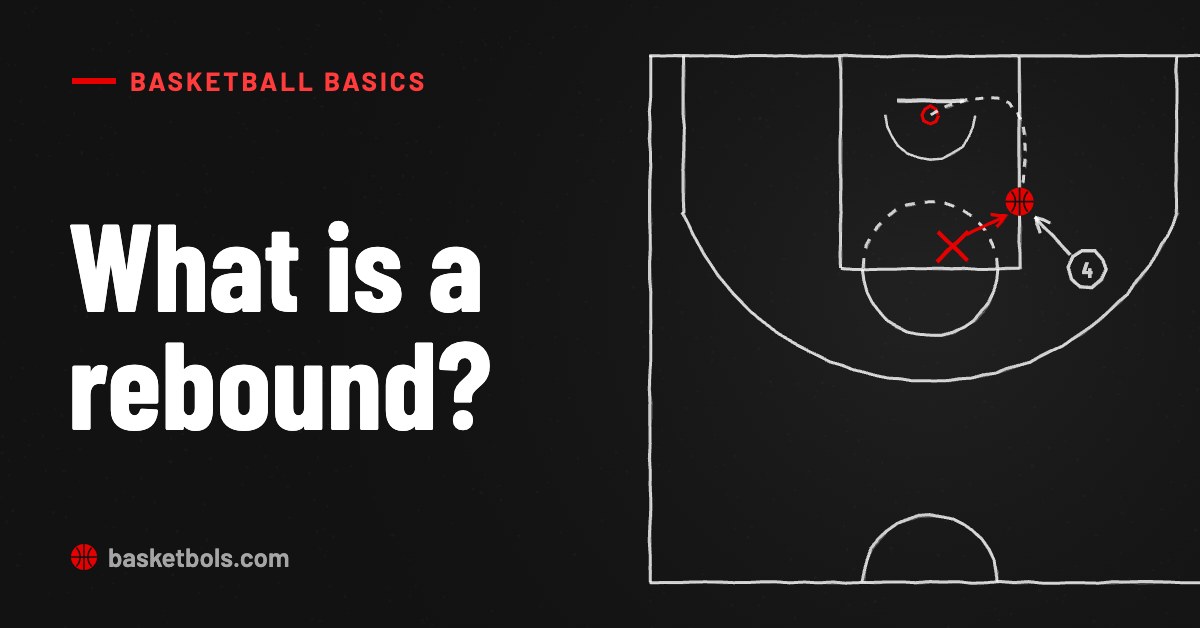
In basketball, it is often said that “the team that controls the glass, controls the game.” Even the greatest scorers like Stephen Curry or Kevin Durant miss shots, and that is where the battle for the Rebound begins.
In this guide, we will break down the definition of a rebound, the different types, and the legendary players who made “hitting the boards” an art form.
A rebound is credited to the player who gains control of the ball after a missed shot or free throw. Wilt Chamberlain holds the NBA career record with 23,924 rebounds.
The Definition: What Counts as a Rebound?
A rebound is credited to a player who recovers the ball after a missed field goal or free throw attempt. It can be grabbed directly off the rim, off the backboard, or even caught mid-air before it hits the ground.
There are two primary types of rebounds:
Defensive Rebound
This occurs when the defending team gains possession after the opponent misses a shot. This is the most common type and is crucial for ending the opponent’s offensive threat.
Offensive Rebound
This happens when the shooting team recovers their own miss. This is a game-changer because it grants an “extra possession” or a “second-chance point” opportunity.
What is a “Team Rebound”?
Sometimes a missed shot goes out of bounds without anyone touching it, or the ball is deflected out by the defense. In these cases, the stat is recorded as a Team Rebound. No individual player gets the credit, but the team’s total increases.
Rebounding Legends: The Kings of the Glass
To be a great rebounder, you need more than just height; you need timing, strength, and a high motor. Here are the legends:
- Wilt Chamberlain: The ultimate rebounding king with 23,924 career rebounds. He once grabbed 55 rebounds in a single game!
- Bill Russell: The only player to rival Wilt, finishing with 21,620 rebounds and 11 NBA championships.
- Dennis Rodman: Despite being only 6’7″, Dennis Rodman led the NBA in rebounds for 7 straight seasons through sheer hustle and study of ball rotations.
See it in Action: The Best Rebounders in History
How rebounding is measured
The box score shows offensive rebounds (OREB), defensive rebounds (DREB) and the total (REB). Defensive rebounds are far more common, because the defense is usually closer to the basket and better placed when a shot misses.
Analysts also use rebound percentage: the share of available rebounds a player grabs while he is on the floor. It is fairer than raw totals, because a team that misses a lot of shots creates more rebounds for everyone on the court.
Boxing out and positioning
Most rebounds are won before the ball comes down. As soon as a shot goes up, defenders find their man, turn and put their body between him and the basket. This is called boxing out. Good rebounders also read the shot: long jumpers tend to bounce long, while misses from close range usually stay near the rim.
Height helps, but timing and effort matter just as much. That is why a 6-foot-7 forward like Dennis Rodman could lead the NBA in rebounding for seven straight seasons.
Rebounds by position
Centers and power forwards grab most rebounds because they play close to the basket. Guards pick up many long rebounds off missed threes, and the best rebounding guards use them to start a fast break right away.
On free throws, the defense gets the lane spots closest to the basket on each side. That is why the defense wins most rebounds after a missed free throw.
Keep learning
- What is a blocked shot in basketball?
- What is a double-double in basketball?
- Basketball positions explained
FAQ
What is the difference between an offensive and a defensive rebound?
A defensive rebound is when the defense grabs the miss and ends the possession. An offensive rebound is when the shooting team gets its own miss back, which gives it another chance to score.
What is the NBA record for rebounds in one game?
55, by Wilt Chamberlain against the Boston Celtics on November 24, 1960.
Does the shot clock reset after an offensive rebound?
Yes. In the NBA it resets to 14 seconds when the missed shot touched the rim.
Sources
- Basketball-Reference: Career Leaders for Total Rebounds
- NBA Official Rulebook: Rule No. 7, Shot Clock